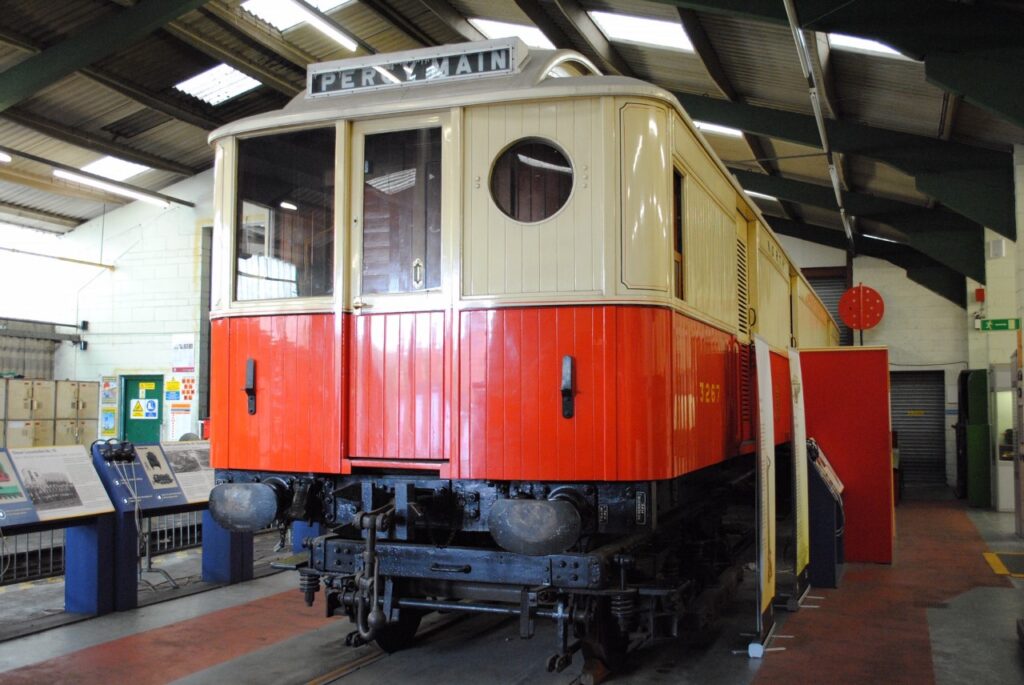
- Builder: North Eastern Railway – York
- Built in: 1904
- Wheel Arrangement: BO-BO
- Worked for: North Eastern Railway
- Current Status: Static Exhibit
At the beginning of the 20th century, local railway services faced growing competition from electric street tramways. In response, the North Eastern Railway introduced a frequent service of fast electric trains between Newcastle and the coast in 1904. This was a landmark moment in railway history, marking the first time electric trains replaced steam locomotives on a British main-line railway. Built in York in 1904, this vehicle is the only surviving example from that pioneering fleet.
Luggage Vans were used to carry ‘sundries’ — parcels and goods that were too urgent, valuable or perishable to travel on the slower goods trains of the time. Running at passenger train speeds, they were powerful enough to haul several additional vans when needed. A ventilated compartment at one end was specially designed to transport boxed fish from the coastal stations at Cullercoats and Tynemouth, ensuring fresh produce could reach markets quickly.
The original Luggage Vans remained in service until 1937, long after the passenger vehicles had been replaced. Their motors were eventually removed and the vans were converted to spray antifreeze onto the ‘third rail’ — the live rail that supplied electricity to the trains — helping to keep services running during freezing weather. This exhibit is on loan from the National Railway Museum.